
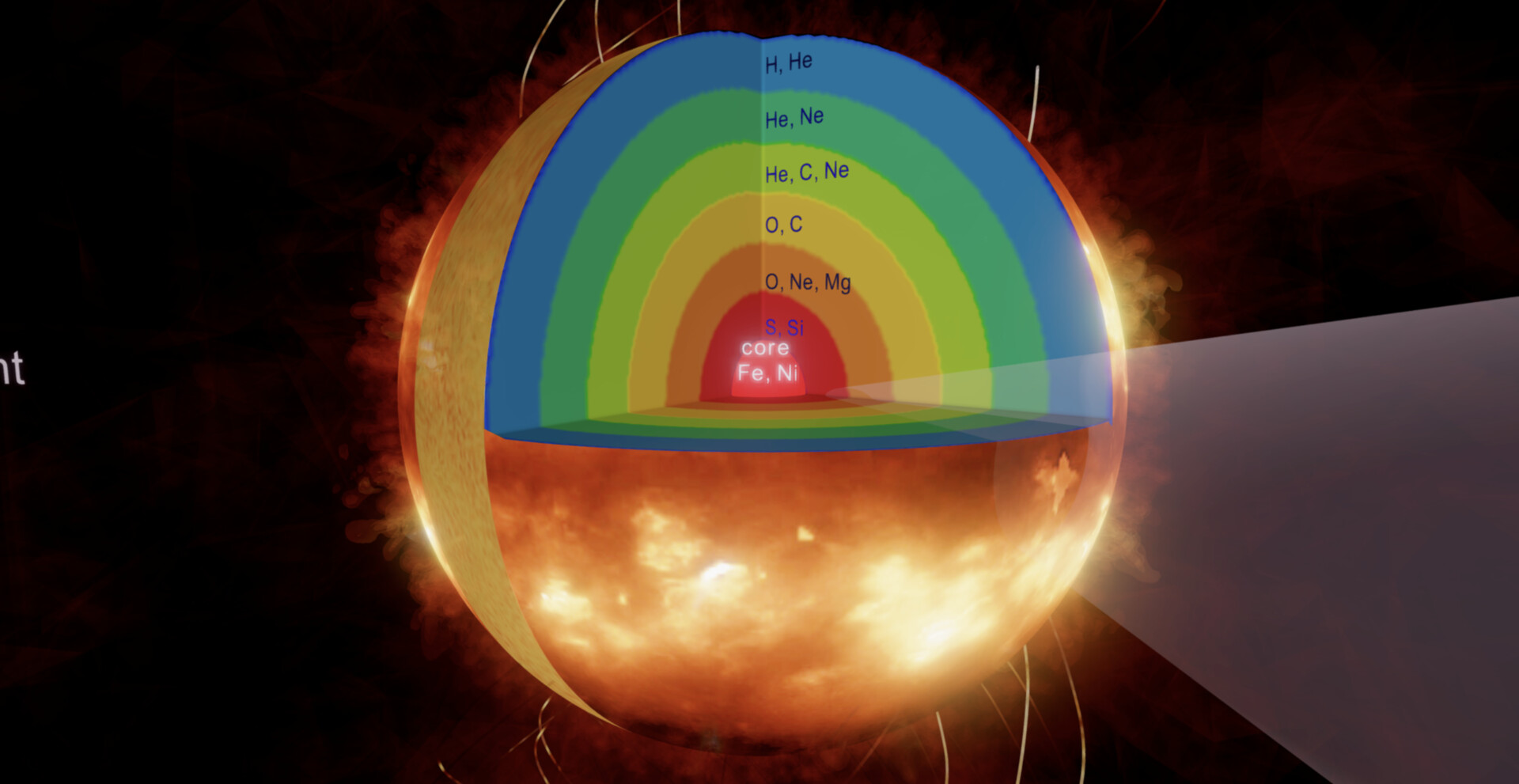

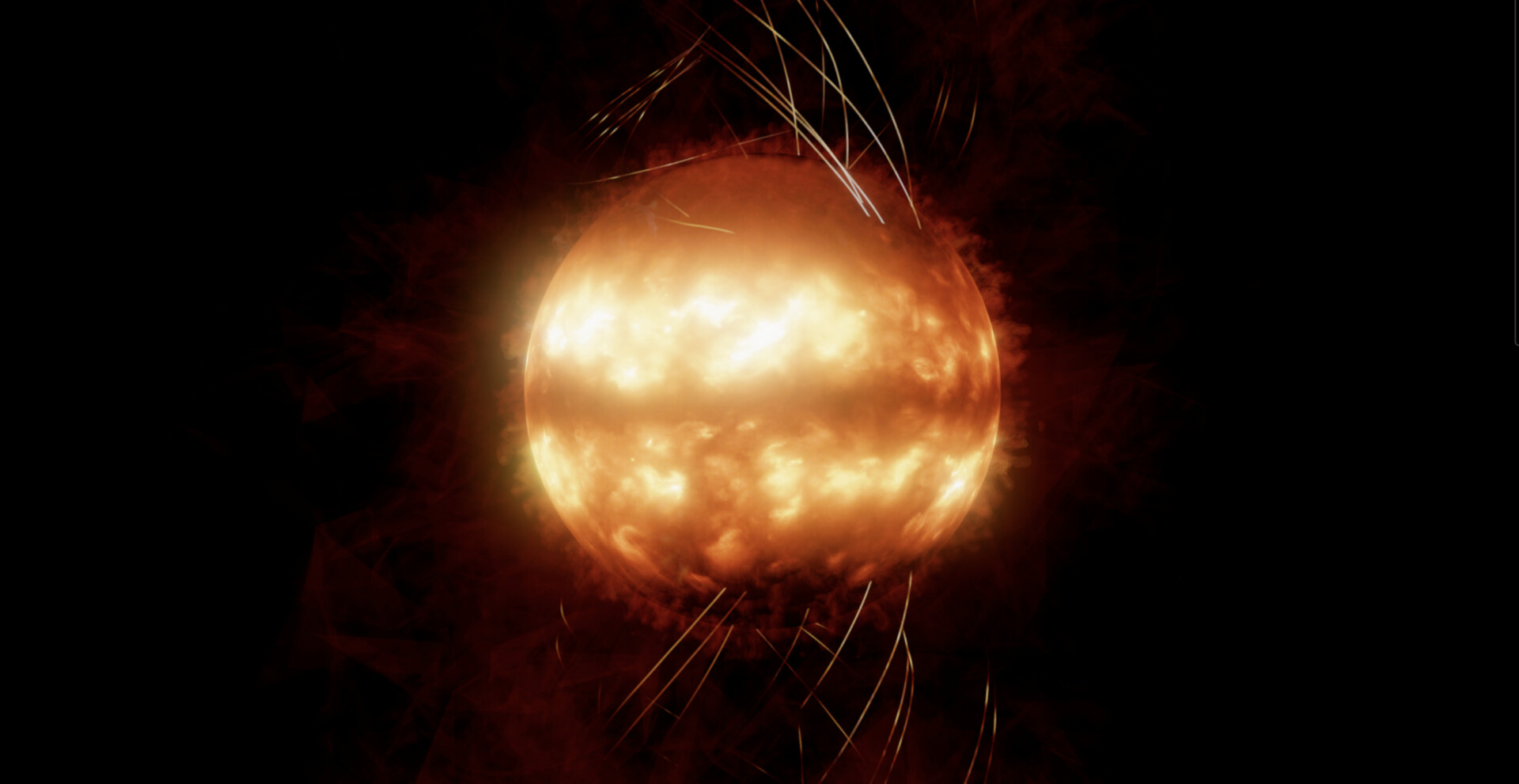
Massive stars with a mass of more than 8 solar masses become red supergiant in the last phase of their life. Their internal structure is characterized by multiple layers of material rich in heavy elements (the so-called onion-like structure). These elements were synthesized inside the star during its past life by thermonuclear reactions, i.e. the fusion of two light atomic nuclei into a single heavier nucleus by collision of the two interacting particles at extremely high temperatures, with the consequent release of a relatively large amount of energy. In this way heavier and heavier elements are synthesized in the innermost layers of the star. This synthesis process stops when the combustion of silicon elements produces iron. The fusion of iron nuclei does not release energy but, on the contrary, requires energy! So no more energy is produced to sustain the star; its core then collapses under the weight of the overlying layers, triggering the process that leads to a catastrophic supernova explosion.


